A burst water heater in a Nashville home can put out gallons per hour onto the floor before you even notice, and the tank keeps draining until someone stops it. This page walks through the steps to take right now, before you call anyone, so the water stops and the damage stops growing while you figure out what happened.
Shut Off The Water First
A burst water heater usually means a failed tank seam or a fitting that gave out, and it can push out water fast. Find the cold water line running into the top of the tank and turn that valve clockwise until it stops. If the handle is stuck or you can't tell which line feeds the tank, close the main water shutoff instead. In an older Nashville home the valve may be original and slow to move, so use a towel for grip rather than force alone.
Cut Power To The Tank
Once the water is off, cut power to the water heater at the circuit breaker before you go near standing water, since a flooded utility closet can put an electrical outlet or the heater's own wiring underwater. If it's a gas unit, the pilot light should go out on its own once the gas control senses the drop, but don't relight anything yourself. A relief valve that's dripping afterward is normal pressure release, not a new leak.
Keep Water Away From Outlets
For an electric water heater, go to the circuit breaker panel and switch off the breaker feeding the unit before you touch standing water anywhere near it. For a gas unit, turn the gas control to off and let the pilot light go out on its own. Never stand in water while reaching for an electrical outlet or a breaker panel with wet hands.
Watch For A Stuck Relief Valve
Look around the water heater for any electrical outlets sitting low on the wall or near the flooring where water has spread. If an outlet is wet or close to standing water, leave it alone and do not plug or unplug anything there. This matters as much in an older East Nashville home with a crawl space as it does in a newer house in Bellevue.
Move Belongings Off The Floor
Most tank failures come from a cracked tank, a failed fitting on the supply line, or a relief valve that let go under pressure. If water is still coming from the relief valve after the main shutoff is closed, that valve itself may be stuck open, and it is worth noting for whoever repairs the unit later. Do not try to force it closed yourself.
Start Removing Standing Water
Once the water and power are off, move boxes, furniture legs, and anything on the floor away from the wet area. Wood flooring, laminate, and carpet all soak up water fast, and the longer items sit in it, the more likely they are to be ruined. This is true whether your home sits in Green Hills, Donelson, or anywhere else around Nashville.
Check Under The Tank Itself
A wet vac works well for standing water on a hard floor, and old towels can soak up what is left along baseboards and in corners. Work from the edges of the wet area toward the center so you are not spreading water into dry rooms. In a Nashville summer, humidity slows drying, so getting water up fast matters more than it would in a dry climate.
Open Windows If You Can
Once the immediate water is cleared, look underneath and around the tank for the actual source of the failure, whether that is a split seam in the tank, a corroded fitting, or a cracked supply line. You do not need to diagnose it fully, but knowing roughly where the water came from helps whoever inspects it next move faster.
Photograph The Damage Now
If the weather allows, open a window or run a fan in the room to help air move across the wet flooring while you wait on next steps. Middle Tennessee humidity means wet materials do not dry on their own the way they might in a drier climate, so any airflow you can add now helps, even if it is not a full fix.
Know When To Call For Help
Before you clean up further, take photos of the tank, the supply line, the relief valve, and the wet flooring from a few angles. These photos matter later for an insurance claim, and they are much harder to get once wet materials have been moved, dried, or thrown out. A few minutes with a phone camera is worth it.
What This Does Not Cover
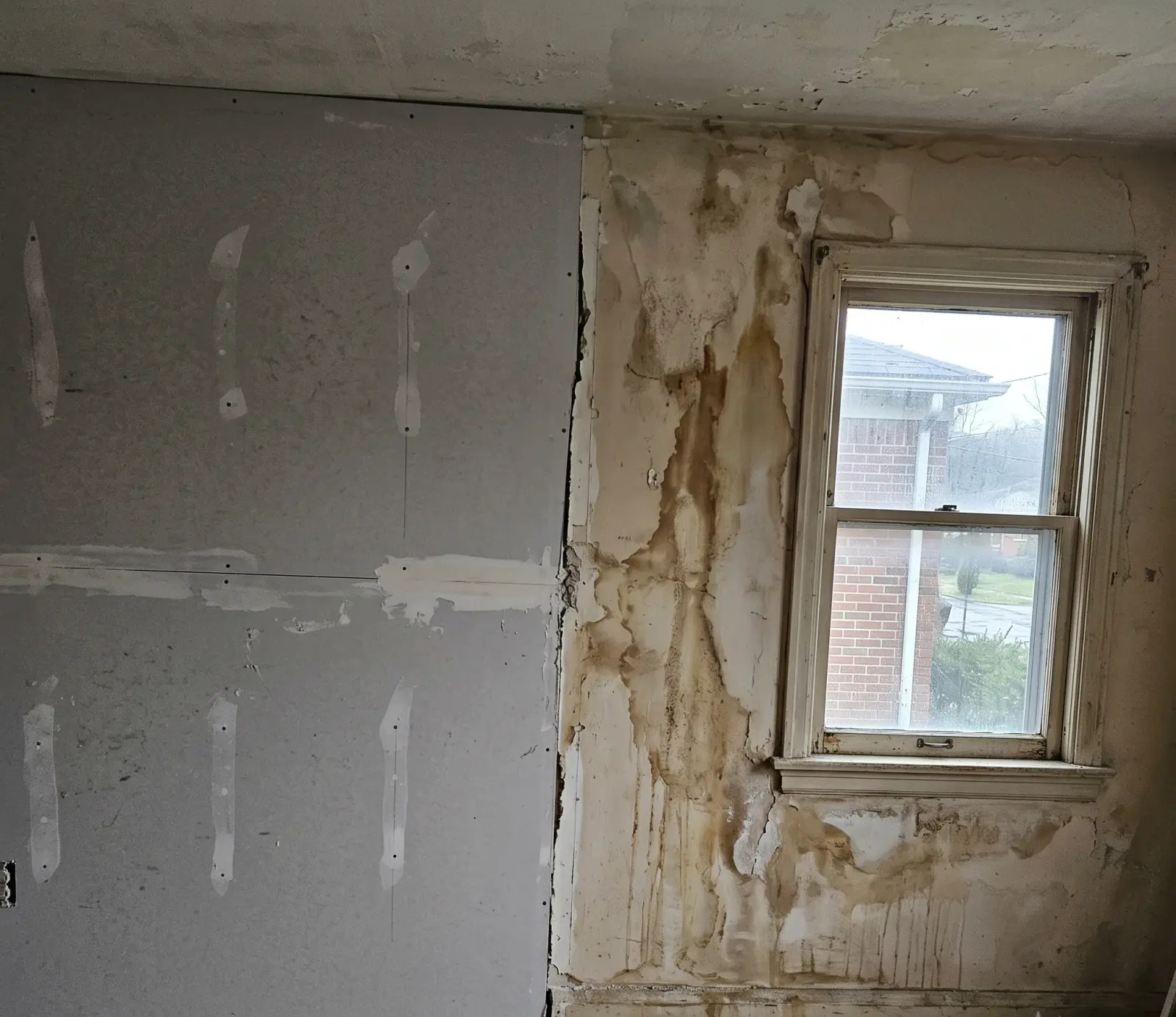
A tank that empties fast can still leave gallons per hour soaking into subfloor and flooring long after the leak itself stops. If carpet, hardwood, or laminate has been sitting in water for more than a few hours, or you can hear water under a slab, that's past what a wet vac and open windows can dry out on their own. That's the point where getting a second set of eyes on the flooring and the space underneath it stops being optional.
Dealing with this in your home?
Water shows up in Nashville homes for reasons that trace back to the ground itself. Clay soil under neighborhoods like Sylvan Park and Inglewood swells and cracks with the weather, opening paths for water into crawl spaces. Add flash flooding near Mill Creek and the Cumberland River, and a slab, crawl space or basement all fail differently. This page walks through why, and what a homeowner does next.