Category 1, 2, and 3 Water Damage: What's the Difference
How the IICRC S500 water categories decide the cleanup method for a Nashville home, from clean supply-line leaks to contaminated backflow.
Category 1 is clean water with no contamination, like a burst supply line. Category 2 is gray water carrying some pathogens, like an overflowing washing machine. Category 3 is black water, grossly contaminated with sewage or floodwater. The category, set by the IICRC S500 standard, determines which materials can be dried and which must be removed.
Why the Water Category Decides the Cleanup
Not every water loss in Nashville is the same, and the IICRC S500 standard is the rulebook that says so. It sorts water into three categories based on what is actually in it. That sorting decides which materials get saved, which get pulled out, and how much the cleanup ends up costing a homeowner in Green Hills or Antioch alike.
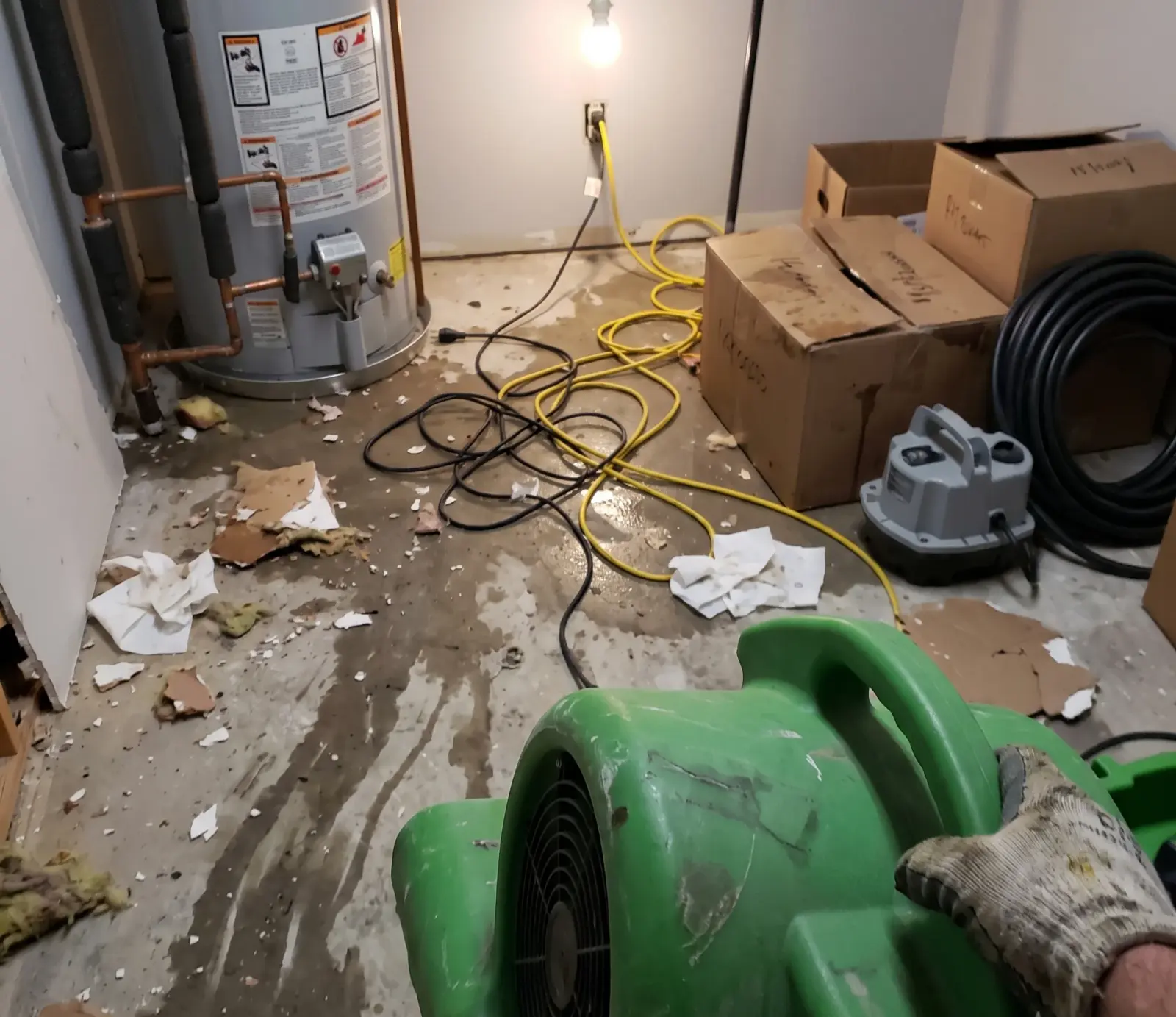
Category 1 covers water with no meaningful contamination at the source: a fresh supply line, a failed appliance hose, a water heater that fails in a Sylvan Park utility closet. It has not touched soil, sewage or standing floodwater. That matters because it changes what gets pulled out of a home. Clean drywall and subfloor from a Category 1 loss can often stay and dry in place instead of being cut out.
A burst supply line under a sink in Sylvan Park starts as Category 1. Leave it sitting for two days in a humid Middle Tennessee summer and the same puddle can slide into Category 2 territory. Time and temperature push contamination up, never down, which is why a fast call matters more than the size of the puddle on the floor.
Category 1: Clean Water Losses
The IICRC S500 standard sorts a water loss into three categories based on contamination level, not where the water came from in your Nashville home. Category 1 starts sanitary but degrades over time and temperature. Category 2 gray water carries enough organic matter to cause illness if ingested. Category 3 black water contains sewage or floodwater and demands antimicrobial treatment plus removal of affected porous materials. Reclassification can move a loss up a category if cleanup stalls.
Cleanup for Category 2 water calls for antimicrobial treatment on surfaces it touched and closer attention to porous materials like carpet pad and drywall. A crawl space under an older Bordeaux home that takes on gray water needs more than a fan and a dehumidifier. The pros we connect you with in Nashville test and treat before deciding what stays and what comes out.
- Category 1 comes from a clean source: a supply line, a water heater, or rain that has not touched the ground. It has not mixed with contaminants yet.
- A frozen and burst pipe during a hard freeze is a textbook Category 1 loss, as long as the pros reach it before it sits long enough to pick up contamination from surrounding materials.
- Category 1 drying is the fastest and cheapest path. Porous materials like drywall and carpet can often be dried in place instead of torn out.
- Time and temperature change everything. Clean water left standing in a humid Nashville summer, or against baseboards for more than 48 hours, can reclassify upward.
- A dishwasher or washing machine supply hose failure in a Sylvan Park or East Nashville kitchen usually starts as Category 1 if caught the same day.
- Once water crosses a floor drain, touches an appliance with detergent residue, or sits long enough to grow bacteria, it stops being Category 1 water under the S500 standard.
Category 2: Gray Water Losses
Category 3 is grossly contaminated water: sewage backup, water that has crossed a sewage line, or river and creek water that came in from outside during flash flooding after a hard rain. Mill Creek and Sevenmile Creek both have flooded property in Nashville outside any mapped floodplain, and that water carries soil, chemicals and pathogens the moment it enters a home. This site's sewage cleanup page covers Category 3 remediation on its own.
Nashville sees this most in homes near Mill Creek or the Cumberland River after flash flooding from a hard rain, and in crawl spaces where groundwater has pushed in slowly over weeks. Gray water can turn into black water the longer it sits, especially once it soaks into porous materials like carpet pad or drywall paper.
- Category 2 gray water can carry bacteria and other pathogens from soaps, food residue, or aquarium water, meaning porous materials it soaks into need more than a wipe-down before anyone should call the area safe.
- Gray water calls for antimicrobial treatment on affected surfaces, not just drying. Some porous materials, like carpet pad, are usually removed rather than dried.
- A toilet overflow with urine but no feces is a common Category 2 example the pros we connect you with see in Nashville homes on crawl spaces and slabs alike.
- Gray water left untreated for as little as 48 hours in a warm, humid house can reclassify to Category 3, which is why the IICRC ties category partly to time, not only source.
Category 3: Black Water Losses
Reclassification changes the plan a homeowner in Antioch or Donelson gets from the pros we connect you with. What started as a straightforward dry-out for a Category 1 pipe break can turn into removal of carpet, pad and lower drywall once enough hours pass without drying equipment running. That is one reason a fast call matters more than which category the water started in.
Porous materials behave differently depending on category. Carpet pad and drywall that touched Category 1 water can sometimes be saved if drying starts quickly. The same materials touched by Category 2 or 3 water are usually removed, because pad and paper-faced drywall hold contamination in a way hard surfaces do not. A licensed pro decides this on-site, not from a phone call.
| Category | Common Source | Typical Cleanup Approach |
|---|---|---|
| Category 1 | Burst supply line, sink overflow | Dry and disinfect in place |
| Category 2 | Washing machine overflow, aquarium leak | Antimicrobial treatment, some material removal |
| Category 3 | Sewage backup, Cumberland River floodwater | Remove and discard porous materials |
| Reclassified Cat 1 | Clean water sitting untreated for days | Treated as Category 2 or 3 |
| Time factor | Warm, humid conditions | Faster reclassification, faster mold risk |
How Time and Temperature Push a Category Up
Nashville sees all three categories play out for ordinary reasons. A hard freeze in a Whites Creek or Joelton home can split a pipe and produce a Category 1 loss overnight. A slow drain backing up in an East Nashville kitchen can turn into Category 2 before anyone notices standing water. Flash flooding after heavy rain near Shelby Bottoms or the Cumberland River can bring Category 3 straight into a first floor.
The mix of foundation types across Nashville, basements in some neighborhoods, crawl spaces in others, slabs elsewhere, means the category question shows up differently by home. A crawl space in Inglewood traps humid Middle Tennessee air against wet framing longer than a slab does, which speeds up any reclassification clock once water sits.
Why Porous Materials Change the Decision
Insurance adjusters also use these categories, so getting the classification right at the start matters for a claim, not just for cleanup method. A Category 1 loss documented and treated as Category 1 supports a simpler claim than one where contamination was missed early and surfaced later as mold or odor. Photos and notes taken at the first visit in a Madison or Hermitage home carry weight later.
This is also why a homeowner in Inglewood or Donelson should be wary of a quote that skips straight to price without mentioning category at all. Antimicrobial treatment, porous material removal, and reclassification checks are real line items tied to real contamination levels, not upsells invented to pad an invoice.
The S500 Category System at a Glance
- Category 1: clean water, no contamination, from a supply line, water heater, or clean rainwater.
- Category 2: gray water, contains pathogens capable of causing discomfort or illness.
- Category 3: black water, grossly contaminated, may contain sewage or toxic agents.
- The IICRC S500 standard sets these three categories for the whole restoration industry.
- Time and temperature can push clean water into a higher category the longer it sits.
- Category decides cleanup method: dry in place, treat and selectively remove, or fully remove porous materials.
Frequently Asked Questions
Can clean water turn gray just by sitting?
Yes. Water that starts clean can reclassify to gray or contaminated the longer it sits and the warmer the room stays, since bacteria grow without a dirty source. A Category 1 pipe break in a Nashville home left standing for a few days in a humid crawl space can end up needing the treatment of a higher category.
Can Category 1 water turn into Category 3?
Yes. A supply line leak in a Belle Meade or Green Hills home can sit for a day in a humid Middle Tennessee summer and pick up contamination from carpet, drywall or standing time. The clock, not just the source, decides the category.
Does my insurance care about water category?
Yes. Adjusters use the category to judge whether porous materials like carpet pad or drywall need replacing versus drying, which changes the estimate. A Category 3 loss in an older Bordeaux or Inglewood home typically costs more to settle than clean water.
Is a burst pipe always clean water?
Yes. If a Category 1 leak sits behind a wall or under flooring in a Nashville home for more than 48 hours in a humid summer, it's often reclassified to Category 2 before cleanup starts, since clean water picks up contaminants fast once it's absorbed and sitting.
Who decides the water category on my job?
Reclassification depends on the source, the time elapsed, and what the water touched on its way through the house, not on a fixed hour count. A pro checks all three before choosing a cleanup method for a Nashville property.
Not sure which category your water is?
If water is sitting in a Nashville home right now, the category matters less than getting it identified fast. Reach the licensed pros we connect you with before standing water decides its own classification.
Call (615) 821-1762